


Today is Madame Chien-Shiung Wu’s 113th birthday! Some interesting facts about Madame Wu:
- She was inspired to become a scientist by reading a biography of Marie Curie.
- She left the University of Michigan to go to the University of California, Berkeley for her graduate studies partly because at Michigan they forbade the female students from using the front entrance of certain buildings.
- The USPS issued a stamp in 2021 to commemorate her. Details about the artists and their inspiration are given here.
- She was life-long friends with Dr. Margaret Nast Lewis (the other scientist in the picture above) who was the daughter of two famous biologists: Margaret Adaline Reed Lewis and Warren Harmon Lewis.
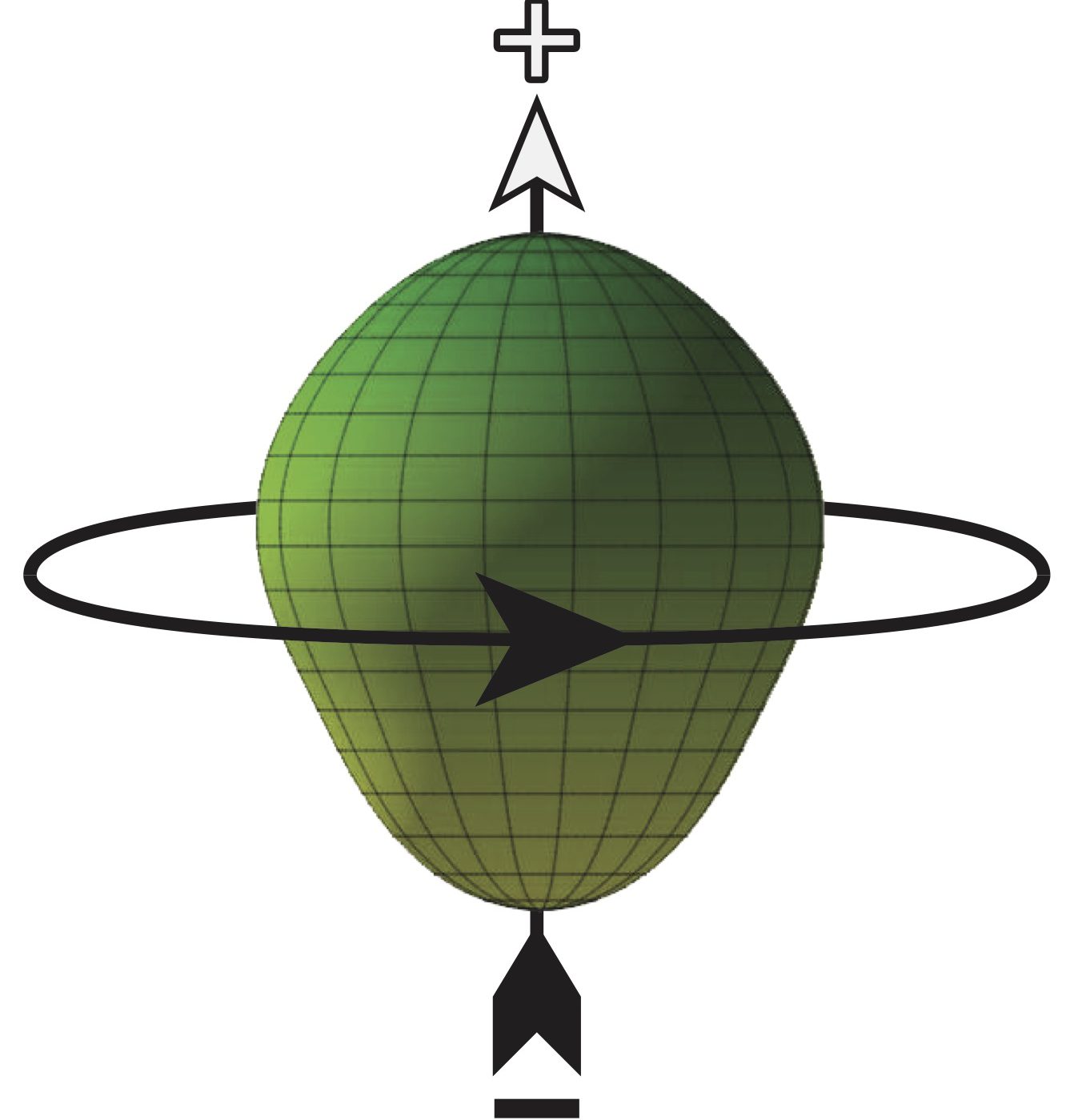
She is probably most famous for conceiving and carrying out the first experiment published that indicated that parity was violated in the weak interaction. This experiment has a fascinating history that is recounted in Chapter 9 in Tsai-Chien Chiang’s book Madame Wu Chien-Shiung: The First Lady of Physics Research. The author interviewed all of the main participants around 1990 for the reconstruction of the account given in this book chapter below:


Other accounts of this story are given here:
- NIST Colloquium: New Insights into Old Problems, by Nobel Laureate T.D. Lee (2005-12-02)
- APS This Month in Physics History: December 27, 1956: Fall of Parity Conservation
- NIST Virtual Museum Exhibit
- APS Physics Focus Landmarks—Breaking the Mirror

The exhibit @ NIST – photo taken by JTS on 2017-10-30 
The exhibit @ NIST – photo taken by JTS on 2017-10-30 
The actual apparatus – photo taken by JTS on 2017-10-30 
The exhibit @ NIST – photo taken by JTS on 2017-10-30 
Logbook page with note “parity not conserved” and the actual sample holder – photo taken by JTS on 2017-10-30
One of the reasons that the results of the Co-60 beta decay experiment, physically performed at the National Bureau of Standards (now NIST, see slideshow above from my visit in October 2017), was accepted so quickly is that it was nearly instantaneously corroborated by two other experiments using other methods:
- original Co-60 beta decay paper (started in the Fall of 1956 and published first): Phys. Rev. 105, 1413 – Published 15 February, 1957
- The Famous Pion to Muon to Electron experiment (started and completed within one week in early January 1957 and published second) by Richard L. Garwin (who only recently passed away), Leon M. Lederman (Nobel 1988), Marcel Weinrich: Phys. Rev. 105, 1415 – Published 15 February, 1957
- The Other Pion to Muon to Electron experiment (experiment started in the Summer of 1956 but the publication was delayed placing them in third place) by Jerome I. Friedman (Nobel 1990) and Valentine L. Telegedi: Phys. Rev. 105, 1681 – Published 1 March, 1957 and Phys. Rev. 106, 1290 – Published 15 June, 1957
For context: the famous Lee and Yang paper was received in the Summer of 1956 and published in the Fall of 1956: Phys. Rev. 104, 254 – Published 1 October, 1956. Many aspects of whole story for these three papers including an editor’s notes and more are given below:
One interesting footnote is that parity violation might have been discovered in 1920’s in a series of experiments studying the double scattering of electrons. This story is told from the point of view of Richard Cox (one of the co-authors) and beautifully placed in historical context by physicist and historian Allan Franklin in his book The Neglect of Experiment.
Some of the considerable controversy still associated with the famous Co-60 beta experiment is the apparent neglect of the major contributions of the NBS team lead by Ernest Ambler. While Madame Wu was nominated for the Nobel Prize in Physics over 20 times and was awarded the first Wolf Prize in Physics, Ambler nor any member of the NBS team were similarly recognized. Ambler’s thoughts are recorded here in the NIST Oral Histories from 1988. The importance of the NBS contribution was emphasized by Nicholas Kurti in his 1958 Physics Today article on nuclear orientation by cooling.
Finally some other reminiscences of Madame Wu were given in this 1997 conference celebrating her life just months after she passed away.
You must be logged in to post a comment.