
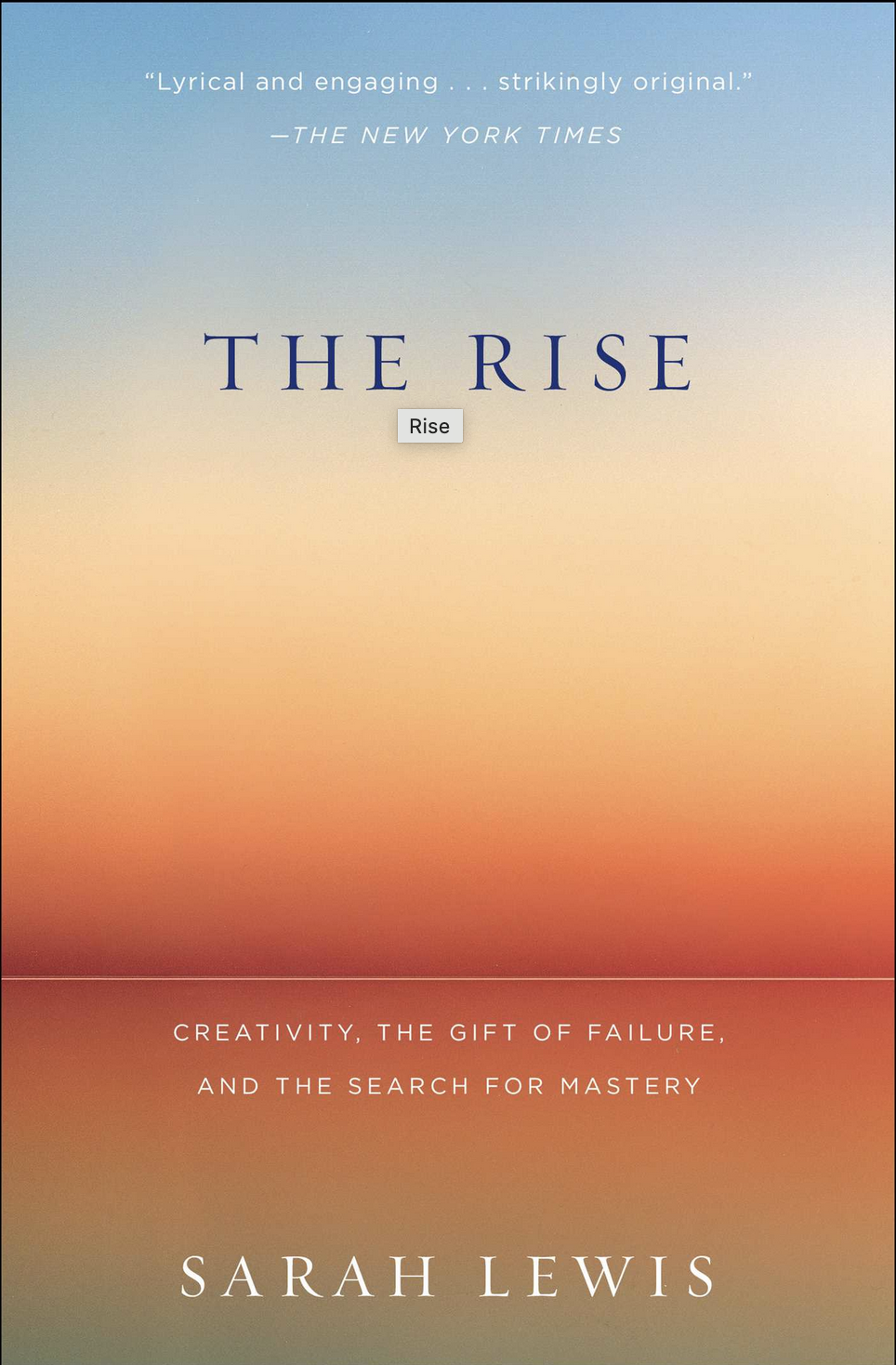

This book is a collection of narratives on the act of creation, but this description does not really do the book justice. It contains a broader perspective on the process of performing challenging tasks through the lens of art loosely defined. The themes include:
- pursuit of mastery in contrast to the pursuit of perfection
- pursuing excellence in obscurity because one’s own internal standards of what is “good enough” are sufficiently high that external validation for being “the perfect student” becomes irrelevant
- “…the joy of a skilled craftsman in a job well done.” – Freeman Dyson
- requires an Apprenticeship Phase, see this six-part guide by Tim Ferriss and Robert Greene
- the advantages of failure
- nothing works on the first attempt – at least no experiment that I’ve ever been involved in
- the plan should include making multiple attempts with the explicit goal to learn from each attempt
- labor vs. work
- “Work is what we do by the hour but labor sets its own pace.” – Lewis Hyde
- work = driving a bus, labor = being a parent
- that is why raising a child is a “labor of love”
- think about when you can “turn off” being a parent vs. “turning off” being a bus driver
- alternatively, when is each of these roles “done” or “finished”?
- near wins as motivation
- knowing how and when to ignore critique – developing a personal taste in the aesthetic sense
- the need for deadlines – “To achieve great things, two things are needed: a plan and not quite enough time.” – Leonard Bernstein
- deliberate play as an amateur
- Einstellung Effect – “…the cost of success is that it can block our ability to see when what has worked well in the past might not any longer….” – SL
- “Random Walk to Graphene” by Andre Geim – Nobel Lecture 2010
- using surrender to conserve limited precious energy by not resisting external factors outside of our direct control (see related concept of Amor Fati and some of the central themes of Stoicism)
- having a vision as a prerequisite for moving towards a grand goal (see the concept of Aesthetic Force by Frederick Douglass
- start with pictures not words
- or equivalently “elevated language” and then “rational persuasion” – Longinus
- or motivate the elephant first and then guide the rider…
This book is now required reading for any prospective graduate student interested in joining Spinlab so that they can better understand the philosophical framework behind my expectations for a scientist-in-training. FYI: it took me less than 4 hours to read in one sitting while taking handwritten notes.
Note that two things can be true at once.
See also Anne Lamott’s perspective on perfectionism from her classic book on writing Bird by Bird below:
See also “The Maker Movement Manifesto” (short version) at the beginning of the book by Mark Hatch also called The Maker Movement Manifesto:
You must be logged in to post a comment.