
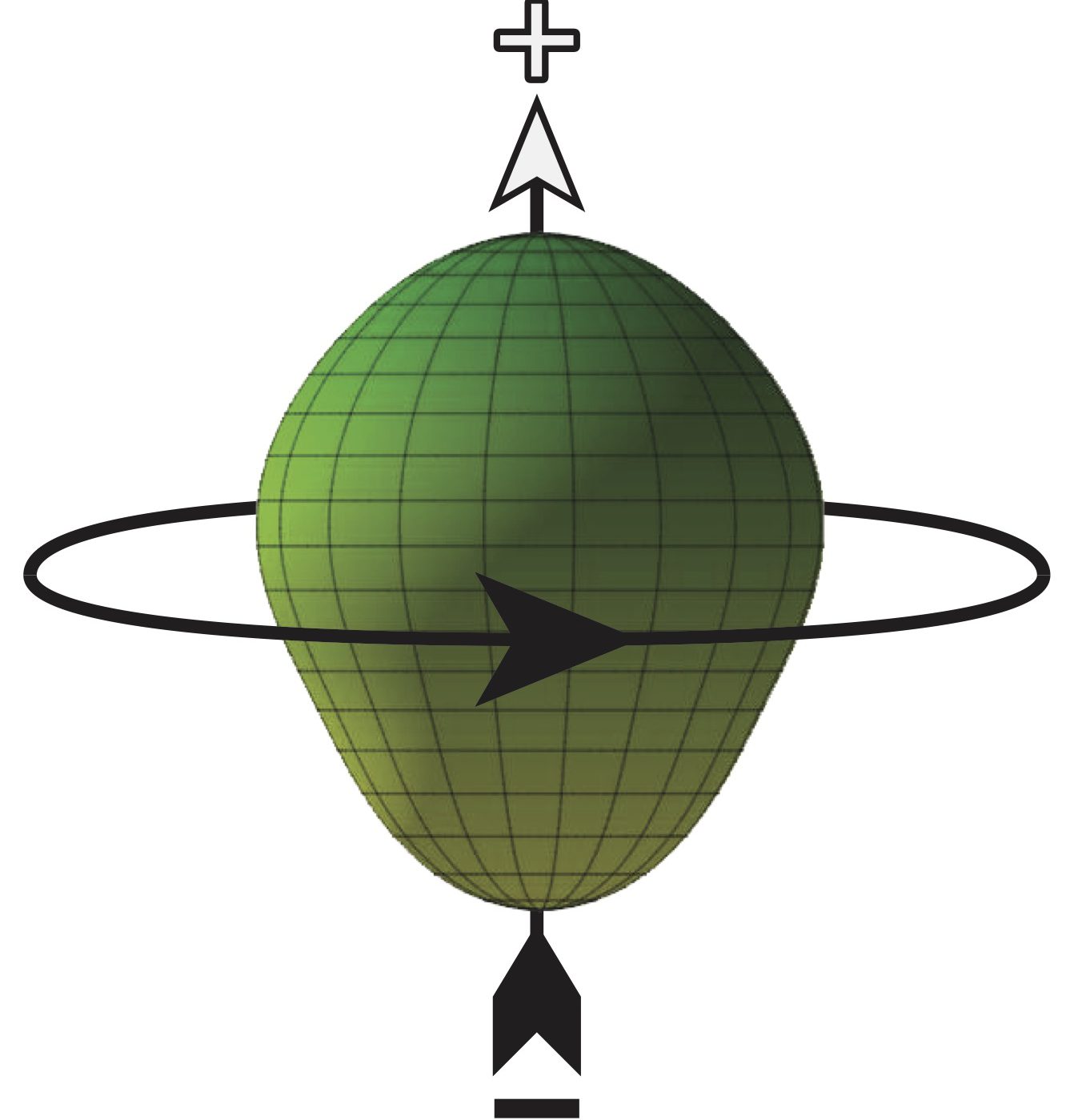

This technical note by Lee & Yang, first published in October 1957, is based on a series of lectures given in January 1957. Of particular note is “Section III.4 Static Electric Dipole Moment” on page 17 which indicated, perhaps for the first time, that non-zero EDMs would violate not only parity symmetry and but also time-reversal symmetry.
Forward
The substance of these notes comes from pub- lished and unpublished research of the under- signed. In form and presentation these notes follow largely a series of six lectures given by one of us (T.D. Lee) at Brookhaven National Laboratory during January 1957. The lecture notes were originally edited by Drs. L.C.L. Yuan, B.H. McCormick, W. Chinowsky, and R.K. Adair, to all of whom grateful acknowledgment is hereby made. Dr. Yuan is especially to be thanked for the time and advice he generously contributed in the process of the later expansion and changes in the notes.
T.D. LEE
C.N. YANG
Official document record from the US DOE, Office of Science, Office of Scientific and Technical Information:
| Title | Elementary Particles and Weak Interactions | |
| Author(s) | Lee, T. D.; Yang, C. N. | |
| Publication Date | 1957 | |
| Report Number | BNL-443 | |
| Unique Identifier | ACC0452 | |
| Other Numbers | OSTI ID: 4326727 | |
| Research Org | Brookhaven National Laboratory (BNL), Upton, NY | |
| Sponsoring Org | U.S. Atomic Energy Commission (AEC) | |
| Subject | Physics; Beta Decay; Electric Charges; Elementary Particles; Fermi Interaction; Field Theory; Interactions; Ions; Leptons; Mach Principle; Neutrinos; Parity; Regeneration; Testing; Time Reversal; Weak Interactions | |
| Related Pages | Tsung-Dao Lee Weak Interactions, and Nonconservation of Parity | |
| Abstract | Some general patterns of interactions between various elementary particles are reviewed and some general questions concerning the symmetry properties of these particles are studied. Topics are included on the theta-tau puzzle, experimental limits on the validity of parity conservation, some general discussions on the consequences due to possible non-invariance under P, C, and T, various possible experimental tests on invariance under P, C, and T, a two-component theory of the neutrino, a possible law of conservation of leptons and the universal Fermi interactions, and time reversal invariance and Mach’s principle. (M.H.R.) | |